Nursery textiles · Materials and care
Naturepedic Waffle Weave: A Closer Look at Nursery Textiles
A small shift in texture can change how a textile feels, hangs and behaves in everyday use. In a nursery, the raised geometry of a waffle weave brings visual softness and tactile interest to cotton—while questions of warmth, washing and safe sleep remain essential.
Some fabrics make their impression through color or pattern; others rely on the quiet architecture of the weave. Waffle cotton belongs to the latter. Its little ridges and recessed squares create a surface that looks considered without feeling ornate, and give an otherwise simple nursery textile a depth that catches the eye. In a room built around gentle light, natural materials and practical routines, that texture can feel both decorative and useful.
Yet the language of textiles can make a modest construction sound more mysterious than it is. A waffle weave is not a special fiber: it is a way of interlacing yarns to create a raised, grid-like surface. The fiber, yarn, density and finishing still matter. For a caregiver, those details can help explain why a cotton blanket feels light or substantial, how it drapes over an arm, and what to expect when it goes through the wash.
This guide looks at the construction and everyday character of organic cotton waffle-weave nursery textiles, including Naturepedic’s organic cotton waffle blanket and baby blanket as examples of the category. It also draws a clear line between a comfort textile used during supervised, awake moments and anything placed in an infant’s sleep space. Texture can make a nursery feel inviting; safe-sleep guidance must remain the priority.
What a waffle weave actually is
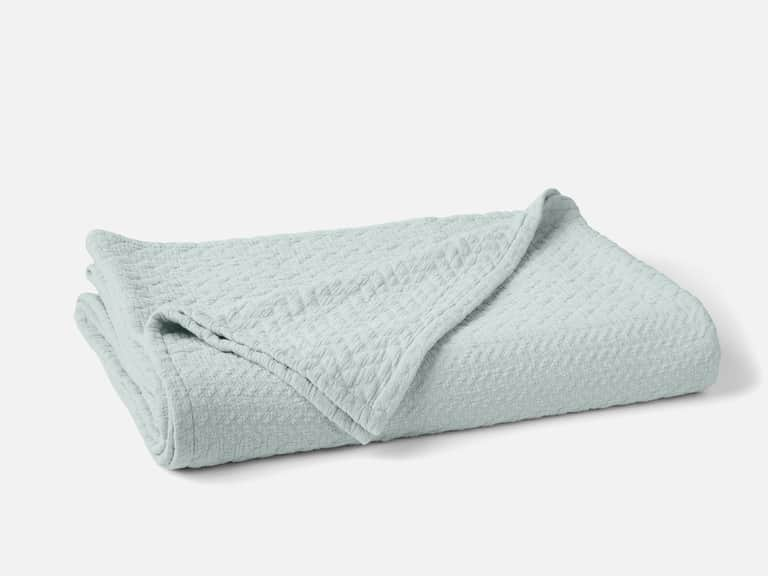
In a waffle weave, the yarns cross in a pattern that forms small raised blocks separated by lower channels. The result resembles a fine grid or honeycomb, although the precise scale and definition vary from one textile to another. The pattern is structural rather than printed: its character comes from how the threads are woven, not from a design applied to the surface afterward.
That construction creates a pleasing contrast between the high points and the recessed areas. Light moves across the relief, making plain colors feel more dimensional. The surface also feels different from a flat, closely woven cotton cloth: there is a soft, gently nubby quality under the fingertips, with more visual presence than a smooth sheet but less bulk than a heavy pile fabric.
Waffle fabrics can be made in different weights and densities. A looser or lighter construction may feel airy and flexible; a denser one may feel more substantial. The word “waffle” alone cannot tell you exactly how warm a blanket will be or how it will behave in a particular room. Those qualities depend on the full construction, including yarn size, fiber, finishing and dimensions. It is worth considering the textile as a whole rather than treating the weave name as a promise of a particular performance.
Cotton, texture and the question of airflow
Cotton is a familiar choice in nursery textiles because it has a soft hand, can feel comfortable against skin and is available in a wide range of weaves. In a waffle construction, the textured surface and open spaces between raised areas may encourage air to move through the fabric compared with a very dense, flat cloth. That can contribute to a lighter impression and make the blanket pleasant to handle across different seasons.
It is important, however, to distinguish a fabric’s feel from a guarantee about temperature. A breathable weave does not make a blanket suitable for every sleep situation, nor does it ensure that an infant will remain at a particular temperature. Room conditions, clothing, the blanket’s weight and how it is used all matter. In particular, a baby blanket should not be placed in an infant’s sleep space simply because its cotton is light or its weave is open. Follow current safe-sleep advice and keep loose bedding out of the sleep area.
Organic cotton refers to how the cotton has been grown and processed under the standards associated with the relevant certification. When a textile is described as certified, caregivers can check the label and certification information to understand what that claim covers. Organic status does not by itself establish that a blanket is appropriate for an infant’s sleep space, eliminate the possibility of individual skin sensitivities or replace care instructions. It is one consideration among several: construction, intended use, laundering and safety remain distinct questions.
Softness is a combination, not a slogan
Softness is deeply personal. One person may prefer a smooth, cool cotton surface; another may find a gently raised weave more comforting. With waffle cotton, the hand is shaped by the difference between ridges and recesses, as well as the yarn and finish. A pre-washed textile may arrive with a relaxed, softened feel, while repeated laundering can gradually alter its texture. The care label is the best guide to how the maker expects the fabric to be maintained.
Texture also affects how a blanket sits in a room. A waffle surface gives a solid color a quiet pattern, so it can add interest without asking for attention. Folded at the foot of a bed, arranged over the back of a chair, or kept nearby for an adult during a supervised cuddle, it can lend a nursery a layered, lived-in quality. The same tactility that makes a textile appealing to touch can make it visually rich, particularly in restrained shades such as cream, soft gray, muted blue or warm brown.
When assessing a fabric description, look for concrete details rather than relying on adjectives alone. Fiber content, weave, dimensions, finishing and washing instructions provide a more useful picture than broad assurances of softness or comfort. If you can examine the textile in person, notice whether the raised pattern feels pronounced or subtle, whether the edges lie flat and whether the fabric seems suited to the way you plan to use it.
Weight and drape in a nursery setting
Weight changes both the practical and visual character of a blanket. A lighter cotton waffle textile may fold neatly and feel easy to carry from room to room. A more substantial version can create a fuller drape and a stronger sense of texture. Neither is automatically better; the appropriate choice depends on the intended use, the household’s routines and the specific care guidance.
Size matters, too. A smaller baby blanket can be convenient for supervised, awake-time use, while a larger textile may suit a chair or a decorative layer elsewhere in the room. A stated dimension describes the item, not a recommendation for how it should be used with an infant. If the textile is being considered for a nursery, read the manufacturer’s intended-use information and follow safe-sleep recommendations from recognized health authorities.
For styling, the simplest approach is often the most effective. Let the waffle pattern provide the detail, then pair it with smoother materials—plain cotton, painted wood or a closely woven cushion cover—to keep the room from feeling visually busy. A neutral blanket can soften a crisp palette; a muted color can echo one small accent elsewhere. A single textured layer usually reads as more deliberate than a cluster of competing patterns.
Everyday care: read the label first
Nursery textiles are part of real domestic life: they may be washed frequently, handled by several caregivers and used in places where spills happen. Before the first wash, check the care label, including water temperature, cycle, drying method and any instructions about bleach or ironing. These details are more reliable than general rules for cotton, because finishes and construction can differ from one blanket to another.
Where the label permits machine washing, a gentle approach can help preserve the surface. Separate similar colors, avoid overloading the machine and use a detergent appropriate for the household’s needs. Follow the care instructions rather than assuming that a natural fiber can tolerate any temperature or treatment. High heat, harsh chemicals or an overly vigorous cycle may affect color, shape or texture, depending on the fabric.
Drying deserves the same attention. If tumble drying is allowed, use the temperature specified on the label and remove the textile promptly when the cycle is complete. If air drying is recommended, spread or hang the blanket so it can dry thoroughly. Make sure it is completely dry before folding or storing it; lingering dampness can make fabrics feel unpleasant and may encourage musty odors.
After washing, the waffle texture may look a little different from how it did when new. Natural fibers can relax, and the surface may become softer with use. Avoid pulling at the raised squares or trimming loose threads without checking the construction. For persistent stains, consult the care instructions before trying spot treatments, as a method that works on one finish may not suit another.
Comfort textile or sleep bedding? The distinction matters
A blanket can be a useful comfort object during moments when an adult is awake and directly supervising. That context is fundamentally different from an infant’s sleep environment. For sleep, current guidance from the American Academy of Pediatrics recommends a firm, flat, non-inclined sleep surface with a fitted sheet and no loose bedding. Caregivers should consult up-to-date guidance from their pediatrician or public-health authority and follow the instructions for their specific sleep equipment.
In practical terms, do not infer sleep suitability from a blanket’s fiber, certification, softness, light weight or breathable construction. A beautiful weave does not change the rules for an infant sleep space. Keep loose blankets, quilts and other soft objects out of that space, and use clothing or a wearable blanket only when appropriate and in accordance with trusted safe-sleep recommendations.
During supervised awake time, a blanket may be used in ways consistent with the child’s age, the setting and the caregiver’s direct attention. Keep it away from the face, avoid unattended use, and do not use a textile to cover a stroller or car seat in a way that could obstruct airflow or supervision. For outings, follow the equipment manufacturer’s instructions and take care not to overheat the baby. When there is uncertainty, ask a pediatric health professional rather than relying on a product description.
This distinction is especially important because the word “nursery” can refer both to décor and to infant sleep. A textile may belong beautifully in the room without belonging in the crib. Styling choices and sleep-safety choices can coexist when each has a clear purpose.
A considered way to choose nursery textiles
For a calm, functional nursery, begin with use rather than appearance. Ask where the textile will live, whether it is meant for supervised comfort or simply as a decorative accent, and how often it is likely to need laundering. Then review fiber content, construction, dimensions, certification details and care instructions. These practical questions help narrow choices before color and texture enter the conversation.
- Check the fiber and weave. Cotton waffle construction offers a raised, tactile surface, but weight and openness vary by textile.
- Read the care label. Confirm washing and drying instructions before regular use, especially when frequent laundering is expected.
- Consider the room’s palette. A textured solid can add depth without competing with prints or other tactile materials.
- Use certification claims precisely. Verify what a named standard covers, and do not treat certification as a substitute for safe-use guidance.
- Keep sleep safety separate. Do not place loose blankets in an infant’s sleep space, regardless of material or weave.
These principles apply beyond waffle cotton. A smooth muslin, a woven cotton throw or a textured matelassé coverlet each has its own look and care profile, but none should be judged by appearance alone. In every case, the intended use and relevant safety advice deserve more weight than a decorative description.
The quiet appeal of a tactile nursery
The enduring appeal of waffle weave lies in its balance: pattern without print, softness without pile, and texture without elaborate ornament. In organic cotton, it offers a familiar fiber in a construction that feels distinctive. A simple blanket can bring a little warmth to a chair, lend a folded layer a considered finish or serve as a supervised comfort textile when its use is appropriate.
Its practical character, however, is shaped by details that deserve attention. Weave structure may influence how airy a fabric feels, but it does not determine every aspect of warmth or make a loose blanket suitable for infant sleep. A label explains how to care for the textile, while health and safe-sleep guidance explains how to create an appropriate sleep environment. Keeping those questions separate makes it easier to enjoy the look and feel of nursery textiles without blurring their limits.
Choose for the room, care for the fabric as directed and use the textile only in an appropriate context. That thoughtful approach gives the waffle weave room to be what it does best: a quiet, tactile layer that brings natural texture to everyday spaces.
Frequently asked questions
Does a waffle weave make cotton more breathable?
The raised structure and recessed channels can give waffle cotton an open, airy feel. Actual performance depends on the fabric’s density, yarn and finishing, so the weave name alone cannot establish how warm a particular blanket will be.
Can an infant use a cotton waffle blanket for sleep?
Do not use a loose blanket in an infant’s sleep space. Follow current safe-sleep guidance and advice from your pediatrician or public-health authority, regardless of the textile’s fiber, weight or weave.
How should an organic cotton waffle blanket be washed?
Follow the blanket’s care label. Washing temperature, cycle and drying instructions vary by construction and finish; avoid assuming that all cotton textiles should be treated identically.
What makes waffle cotton feel different from flat cotton?
The alternating raised and recessed areas create a textured surface with more tactile dimension than a smooth, flat weave. The exact feel depends on the yarn, density and finishing of the fabric.